
Thanjavur Doll Making · Sivakumar's Workshop · Thanjavur
The Doll That Never Falls Down
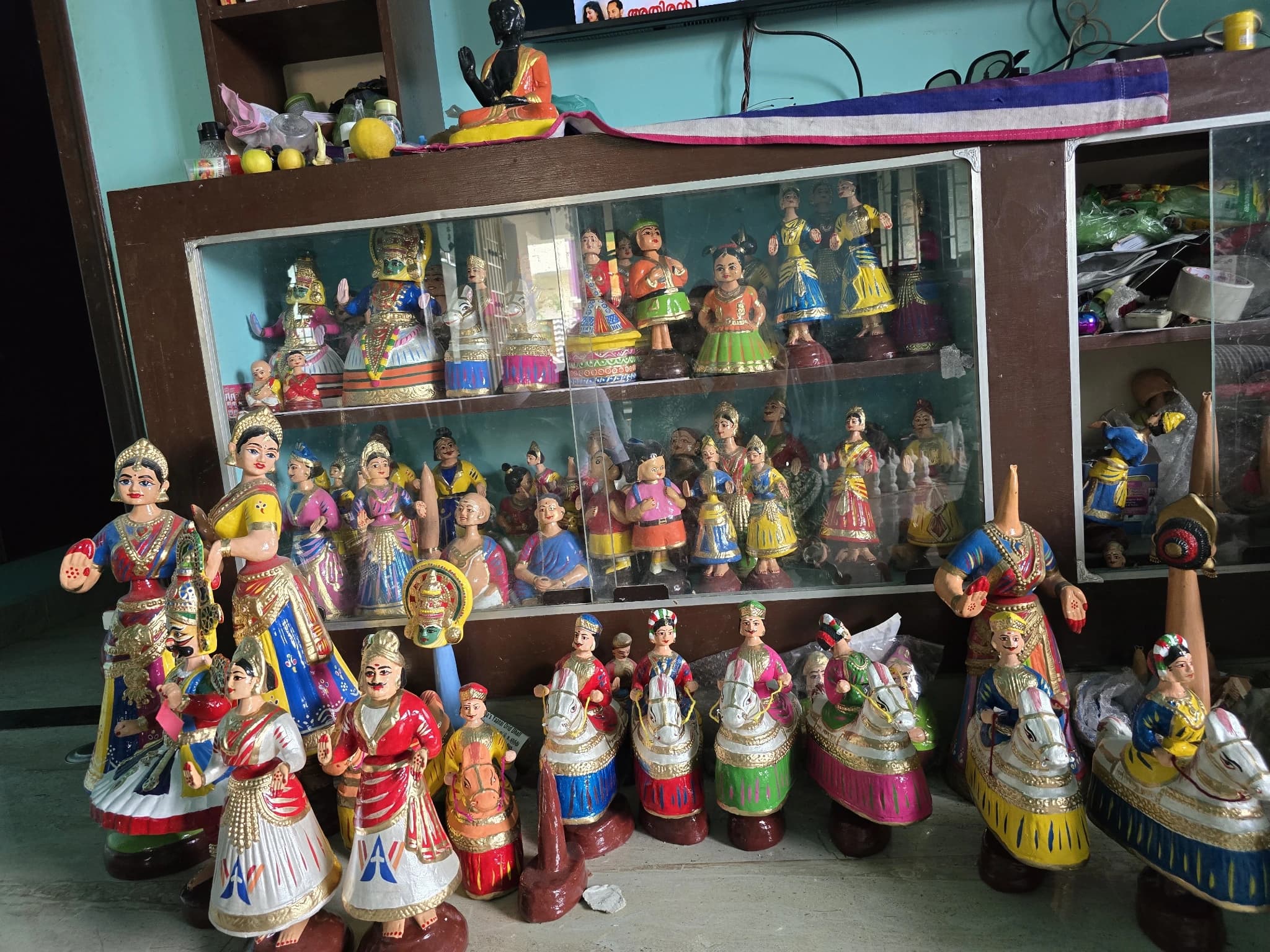
Every child has tapped one. Very few have seen one being made.
Location
Thanjavur
Duration
1–1.5 hours
Host
Sivakumar
Price
₹1,200–1,500 per person
The hook
Every child who has tapped a Thanjavur doll and watched it sway back upright has wondered how it works. The answer is 200-year-old physics — a clay base drawn from the bed of the Cauvery, weighted precisely so no force can keep the doll down. Sivakumar’s family has been doing this since King Serfoji’s court. He is one of fewer than 24 families still making them by hand.
Hosted by locals
Sivakumar. The man behind the nod.
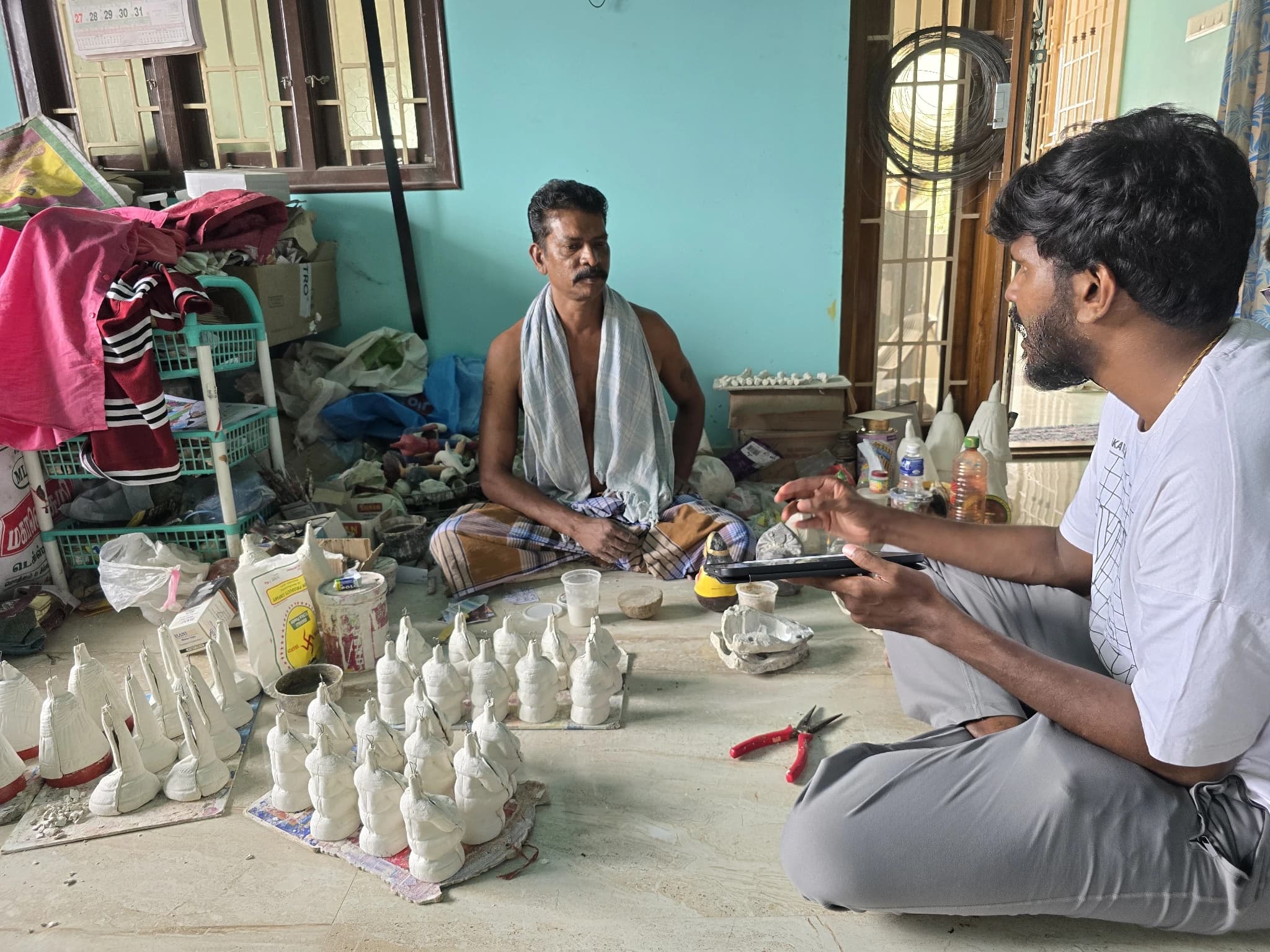
His workshop smells of Plaster of Paris and paint. There are half-finished goddesses on every shelf — some waiting for their second coat, some waiting for their base of Cauvery silt. He has been doing this since he was a child watching his father. He will tell you, without drama, that he does not know who will do this after him.
What you will do
A real experience, not a performance.
Storytelling. The history, the meaning, the why.
Hands-on. How much you do, not just watch.
Hospitality. Warmth, tea, time with the host.
- 01
You arrive to tea. Sivakumar shows you what he is working on — the current batch in production, each at a different stage. He explains the process as he works: the Cauvery clay base that creates the perfect centre of gravity, the plaster mould for the body, the layers of paint applied in sequence. You watch a doll being assembled. You hold the weighted base. You understand, for the first time, why it cannot fall.
- 02
At the end, Sivakumar shows you two types: the Raja-Rani uruttu bommai and the dancing talai aati bommai. He lets you tap one. You leave with a small unpainted doll from the day’s batch — raw plaster, unfinished — and the understanding that the painted ones you’ve seen your whole life were once this.
Good to know
The honest details, before you come.
Duration
1 to 1.5 hours. It ends when the conversation ends, not when a timer rings.
Group size
Maximum 4 guests. Sivakumar’s workshop is a working space, not a demonstration room.
Children
Welcome from age 8. Younger children may find it difficult to focus for the full duration.
What to bring
Nothing. Wear clothes you don’t mind getting plaster dust on.
Accessibility
Ground floor workshop. Wheelchair accessible.
GI status
Thanjavur Thalayatti Bommai received its Geographical Indication tag in 2008.
No payment now
Request a private or shared session.
Spend an afternoon with Sivakumar. ₹1,200–1,500 per person · 1–1.5 hours · up to 4 guests. Our team will confirm availability with you on WhatsApp.
Cancellation terms vary by host and experience. Review the applicable policy before payment.
What stays with you
500 artisans made these dolls for Serfoji’s court. Today it is 24 families. I am one of them. I don’t know who comes after me.
Sivakumar
Explore next
Kumbakonam Betel Leaf Farm Walk
More in Thanjavur